Diversity, Belonging, Equity and Inclusion
DBEI Committee: Community Engagement and Support
The DBEI Committee provides continuous community support through real-time course feedback, specialized training programs, and annual listening sessions. We prioritize ongoing discussions of essential topics to foster learning and development.
Each year (in March) begins with our listening session, where community members share insights that shape our annual initiatives. Our diverse committee – comprising a DEI consultant, four community members, two faculty, and one Institute staff member – works to create programs that leverage our community’s collective expertise and perspectives. Current members include Joshua DeSilva, Lynne Hartwell, Jacqueline Lynch, Karen Pando-Mars, Connie Rhodes, James Santos, and Jacquie Ye-Perman. We extend our gratitude to founding members Kate Halliday, Yuko Hanakawa, Jerry Lamagna, and Ben Medley for their foundational work in establishing this committee.
Our Mission
- To uplift and invite values of diversity, belonging, equity and inclusion and to strive through every element of AEDP to promote diversity in all of its many forms including race/ethnicity, sexuality, gender, age, size, ability, socioeconomic status, relationship status, nationality, culture and religion.
- To foster ways for the AEDP institute to continue to evolve in these areas, including having more diversity in leadership (faculty, supervisors and course assistants).
- Increasing inclusion and belonging in the world wide AEDP community by removing barriers to full participation with historically underrepresented identities and/or groups.
- To continue to develop theory and practices to address the impact of racialized trauma, trauma of oppression, and other forms of being othered in our society.
- To recognize the emergent DBE&I needs within the AEDP community by attending to present cultural moments.
- To help equip therapists to provide an open and engaged intervention to all clients, especially those from marginalized communities across the world.
- To be a learning community and theoretical home for all people in a way that is consistent with our core values of undoing aloneness and creating and maintaining safety and connection, and seeking to create conditions that are conducive to flourishing.
AEDP Vision Collective – AEDP & Healing Racialized Trauma
“Our vision is to create an ongoing, diverse cohort of people who are passionate about working together to develop initiatives and innovative approaches to addressing topics related to “AEDP & Healing Racialized Trauma.” Being attuned to the long-standing, historic and current oppression of global Black communities, and also to this historical moment in the USA, we have been deliberate in focusing on self-identified Black AEDP community members, asking them to take the lead to re-imagine ways that AEDP can address racialized trauma. In the future, we hope to broaden and build this initiative to include other marginalized communities and intersectional identities who experience oppression and systemic injustice.” Meet our members and explore the Collective here.
Programs and Focus
Pay-What-You-Wish Scholarship: Continuing Access for Existing Participants
Launched in July 2020, AEDP® Institute’s Pay-What-You-Wish program supported access to online training for self-identified Black mental health professionals.
The program is now closed to new participants. Those previously approved and grandfathered into the program may continue to use their Pay-What-You-Wish scholarship for AEDP Institute-sponsored courses.
To use your existing scholarship, please email carolyn.f@aedpinstitute.org with:
Your name and the email address associated with your previous participation.
The title and dates of the course you would like to attend.
Your professional license type and number, if applicable.
The amount, if any, you wish to contribute.
We will confirm your eligibility and provide the appropriate registration instructions and scholarship code. Registration is subject to course availability and applicable prerequisites.
To hear about upcoming trainings, please join our mailing list.
Questions or feedback about the program may also be directed to admin@aedpinstitute.org or dbei.committee@aedpinstitute.org.
We recognize the importance of ongoing work with anti-racism training, practices and processes. Members of AEDP Institute faculty and admin participated in “Groundwater” antiracism training with the Racial Equity Institute (REI).
AEDP Institute also partnered with Dr. Della V. Mosley, PhD, Assistant Professor at the University of Florida & Co-Founder of Academics for Black Survival and Wellness, to make available a meaningful, 14 week online training for non-Black therapists in anti-Black racism. This In-Depth training with live, AEDP Colleague Accountability Groups was originally developed by Dr. Mosley and a group of clinical psychologists working in academia to help people better understand anti-Black racism and help support Black professionals in the fields of psychology and academics.
Community members were invited to participate and the Institute sponsored the cost of the training for faculty, supervisors, experiential assistants and admin team members, with roughly 150 community members participating.
We plan to continue training in antiracism and engage with various organizations, leaders and teachers in the years ahead.
Microaggressions: Spotting Them and Repairing Them
Many white people are fearful of “saying the wrong thing” when discussing race. As human beings, we sometimes say the wrong thing. It’s what we do afterward that makes all the difference. Retreating into shame and guilt can exacerbate the harm.
Self-awareness and self-regulation help us bear the discomfort of recognizing implicit biases and the harm they may cause. Repair requires a willingness to stay present and attend to what needs care.
Microaggressions can wound people across many identities and experiences, including race, socioeconomic status, religion, sexual orientation, sex, gender identity, disability, size, and age. This is not an exhaustive list.
Examples include speaking from unexamined racial bias, misgendering someone, making assumptions about a person’s economic or educational background, or centering U.S. or European experiences. Recognizing these patterns may require us to examine our assumptions about power and privilege. Intentions and consequences are not the same. Someone in a position of privilege may want to explain, “I didn’t mean to,” rather than staying with the impact of their actions and attending to the injury.
Committing to repair—recognizing the harm, recalibrating, and changing our behavior—can deepen the relationship.
Steps Toward Repair
The following suggestions address both the person who caused harm and an ally supporting the person affected.
1. Acknowledgement
If you caused harm:
Acknowledge that what you said or did was harmful or hurtful. This serves the relationship.
As an ally:
Acknowledge that what was said or done was harmful or hurtful. This supports the relationship and can model recognition of the harm.
2. Recognizing the Cumulative Impact
If you caused harm:
Recognize that this may not be the person’s first experience of a microaggression. Even if an incident seems small to you, its impact may be cumulative.
For example: “I recognize that this may not be your only experience of something like this, and that my actions have added to that hurt.”
As an ally:
Acknowledge that the incident may connect with previous experiences and add to an existing burden.
3. Affirmation
If you caused harm:
Affirm the person’s experience, even when you believe you have been misunderstood. Stay with their account of the impact rather than moving immediately to defend your intentions.
As an ally:
Affirm the person’s lived experience, particularly when others respond defensively, minimize the harm, or engage in gaslighting.
Consider whether this support is best offered privately or within the conversation, with attention to the person’s needs and sense of safety.
4. A Commitment to Specific Action
If you caused harm:
Identify what you will do differently. Make a clear commitment to changing your behavior.
As an ally:
Identify the specific actions you will take to support repair and respond differently in the future.
5. Apology
If you caused harm:
Offer an authentic apology that names what you are apologizing for. Aim to help the person feel seen, heard, and understood.
6. A Request for Forgiveness
If you caused harm:
Recognize that the person may need more time and may not be ready or willing to forgive. A request does not create an obligation.
You might say: “I value our relationship. I hope you can forgive me, and I understand that you may need time.”
7. Ending the Conversation
If you caused harm:
Make clear that you are not expecting the person to take care of your feelings, soothe you, or find something for which they need to apologize.
8. Self-Care
If you caused harm:
Managing shame and dysregulation can take a toll. Acknowledge your feelings and take responsibility for caring for them without placing that responsibility on the person harmed.
As an ally:
Notice and attend to your own emotional responses so that you can remain present and supportive.
Attend to the Impact
Microaggressions often reveal unconscious bias. If you do not understand exactly what happened, be mindful of asking the person harmed to take on the additional work of educating you. You can begin by acknowledging their hurt without having every answer.
If you step on someone’s toe, the immediate response is to attend to the injury. Saying, “Don’t wear those thin shoes,” or “Stand farther away next time,” adds blame instead of offering care.
Allyship and Undoing Aloneness
Allyship means standing alongside people who have been marginalized while remaining attentive to how they want to be supported.
It differs from saviorism, which involves stepping in without considering the person’s needs or wishes. Allyship may include undoing aloneness, validating the person’s experience, responding to gaslighting, and supporting their voice in naming what occurred.
Based on Kenneth Hardy’s presentation at Marin CAMFT on October 23, 2021, as summarized by Karen Pando-Mars and amended by Jacqueline Lynch and Kate Halliday, AEDP DBEI Committee members.
DBEI Resources
Learning about diversity, belonging, equity and inclusion is an ongoing part of our work as therapists and as a community. These selected resources offer opportunities to explore identity, culture, racism, belonging and access to mental health care, with a particular focus on racialized trauma
Explore Within the AEDP Community
DBEI Speaker Series
Explore presentations that bring diverse voices and perspectives into conversation with the AEDP community.
AEDP Vision Collective
Learn about the Collective and its work on AEDP and healing racialized trauma.
Transformance: The AEDP Journal
Explore clinical writing and reflections from the AEDP community.
AEDP Supervision
Find information about supervision and opportunities to deepen your clinical learning.
Connect With the DBEI Committee
For questions about AEDP’s DBEI initiatives, or to suggest a resource for consideration, please email dbei.committee@aedpinstitute.org.
Racial Trauma, Cultural Humility and Clinical Supervision
Racial Trauma Research — Monnica T. Williams, PhD
Research organized by topic, including assessment, treatment and racism-related stress.
Laboratory for Culture and Mental Health Disparities: Trauma Research
Research and resources concerning trauma and mental health disparities.
Trainee Perspectives on Relational Cultural Therapy and Cultural Competency in Supervision of Trauma Cases
Jennifer M. Gómez. Full-text article.
Attending to Racial Trauma in Clinical Supervision: Enhancing Client and Supervisee Outcomes
Alex L. Pieterse. Publisher’s article page; full-text access may require a subscription.
Multicultural Orientation in Psychotherapy Supervision: Cultural Humility, Cultural Comfort, and Cultural Opportunities
Article citation and abstract, with links to the publisher.
Toward a Psychological Framework of Radical Healing in Communities of Color
Bryana H. French and colleagues. Publisher’s article page.
Radical Hope in Revolting Times: Proposing a Culturally Relevant Psychological Framework
Della V. Mosley and colleagues. Publisher’s article page; access conditions may apply.
Instruments Measuring Perceived Racism/Racial Discrimination: Review and Critique of Factor Analytic Techniques
Full-text research article available through PubMed Central.
Race and Trauma Resources — American Psychological Association
Research and publications relating to race and trauma. APA may display an access or browser verification screen.
Microaggressions, Allyship and Repair
Disarming Racial Microaggressions: Microintervention Strategies for Targets, White Allies, and Bystanders
Derald Wing Sue and colleagues. Citation and abstract with links to full-text options.
Racial Microaggressions in Everyday Life: Implications for Clinical Practice
Sue and colleagues. Publisher access may be required.
Perceptions of Racial Microaggressions Among Black Supervisees in Cross-Racial Dyads
Madonna G. Constantine and Derald Wing Sue. Publisher access may be required.
Is It Racist? Addressing Racial Microaggressions in Counselor Training
Malott and colleagues. Publisher access may be required.
Implicit Bias and Microaggressions: The Macro Impact of Small Acts
A presentation by Derald Wing Sue.
Racial Microaggressions, Whiteness & Feminist Therapy
Journal article PDF.
Why Scholar Loretta Ross Is “Calling In” Callout Culture
An On Point conversation about responding to harm and engaging across differences.
What If Instead of Calling People Out, We Called Them In?
A conversation with Loretta J. Ross.
Mental Health Organizations and Access to Care
The Association of Black Psychologists
Professional programs and resources in African/Black psychology.
Black Emotional and Mental Health Collective (BEAM)
Community mental health, healing justice, training and wellness resources.
Black Mental Health Alliance
Culturally relevant mental health resources and community programs.
Black Therapists Rock
A community and professional resource for Black mental health practitioners.
The Loveland Foundation Therapy Fund
Information about therapy assistance for Black women and nonbinary individuals in the United States. Check current eligibility and availability.
National Queer and Trans Therapists of Color Network
Resources at the intersection of racial justice, gender and sexuality.
Inclusive Therapists
A therapist directory focused on inclusive and affirming care.
Melanin & Mental Health
Therapist connections and mental health resources for Black and Latinx communities.
Sista Afya
Community mental wellness resources.
The AAKOMA Project
Research and resources supporting the mental health of youth and young adults of color.
Black Mental Wellness
Mental health education and resources centering Black communities.
Black Girls Smile
Mental health education and support for Black girls and young women.
The Okra Project
Community support centering Black trans people.
Eustress
Mental health awareness and community engagement.
Project LETS
Peer support and disability justice resources. Visit the organization for its current programs.
Recorded Learning and Professional Development
Lifting Black Voices: Therapy, Trust, & Trauma
Clearly Clinical panel discussion with Tiffany Crayton, La Shanda Sugg and L.J. Lumpkin.
Providing Inclusive, Respectful Care to Your Gender Questioning, Transgender, & Nonbinary Clients
Clearly Clinical course featuring Dara Hoffman-Fox.
Decolonizing Clinical Supervision
Training with Dana Stone and Jessica ChenFeng.
Fighting Racism Without Shaming
A recorded discussion about engaging in anti-racism work.
On Decolonizing Therapy with Jennifer Mullan and Bianca Laureano
A recorded conversation on decolonizing therapy.
Kindred Medicine
Training and consultation with an anti-oppression and anti-racism focus.
Podcasts, Interviews and Wider Perspectives
Seeing White — Scene on Radio
A documentary podcast series examining race and whiteness.
Rerooted
Conversations about healing and human experience.
Racial Trauma with Dr. Thema Bryant-Davis — The Trauma Therapist Podcast
An interview focused on racial trauma.
Melanated Social Work Podcast
Conversations about mental health, social work and social justice.
Resmaa Menakem: “Notice the Rage; Notice the Silence” — On Being
An interview with Krista Tippett about race, embodiment and healing.
Good Ancestor Podcast — Layla F. Saad
Conversations about identity, responsibility and social change
Brené with Aiko Bethea on Inclusivity at Work: The Heart of Hard Conversations
A conversation about inclusion, leadership and difficult conversations.
Representation Matters in Social Work: We Need More Black Therapists
A perspective on representation in the profession.
Anti-Racism Resources for Social Workers and Therapists
An additional resource collection, originally published in 2020.
Educators and Social Media
Decolonizing Therapy
Jennifer Mullan’s educational account.
Melanated Social Work
Perspectives on mental health and social justice.
Sonya Renee Taylor
Perspectives on radical self-love and body liberation.
Leesa Renee Hall
Perspectives on bias and reflective practice.
Rachel Cargle
Perspectives on race and social change.
Books for Reflection and Conversations With Children
The Inner Work of Racial Justice — Rhonda V. Magee
Race Talk and the Conspiracy of Silence: Understanding and Facilitating Difficult Dialogues on Race — Derald Wing Sue
Separate Is Never Equal: Sylvia Mendez & Her Family’s Fight for Desegregation — Duncan Tonatiuh
Little Leaders and Little Legends — Vashti Harrison
The Day You Begin — Jacqueline Woodson
Brown Girl Dreaming — Jacqueline Woodson
Not My Idea: A Book About Whiteness — Anastasia Higginbotham
All the Colors We Are / Todos los colores de nuestra piel — Katie Kissinger
Antiracist Baby — Ibram X. Kendi
Child Mind Institute: Racism and Discrimination
Guidance for parents and caregivers on conversations with children about racism
Meet the DBE&I Committee Members
Lynne Hartwell

Jacqueline Lynch, PhD
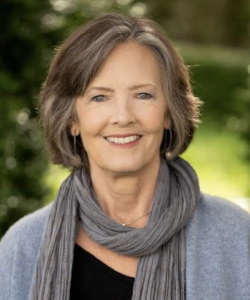
Karen Pando-Mars, MFT

H. Jacquie Ye-Perman, PhD
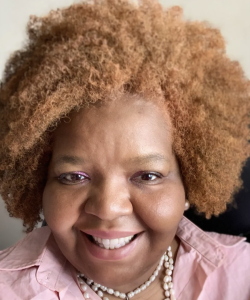
Connie Rhodes