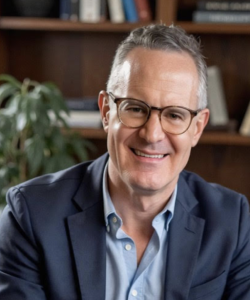
Yuko Hanakawa, PhD

I often say that AEDP raised me. I met Dr. Diana Fosha as a doctoral student at Adelphi University, and from that first encounter, I was all in — drawn into the transformative power of this work and never quite let go. Over the past two decades, my focus has deepened around body-mind connection, positive emotions, and the art of moment-to-moment tracking.
My contributions to the field include a chapter on moment-to-moment tracking in Undoing Aloneness and the Transformation of Suffering into Flourishing: AEDP 2.0 (2021), a clinical article on therapist-patient gratitude in the Transformance Journal (2011), and most recently, “Wired for Harmony: Cultural Neuroscience and AEDP® with Asian Clients” in Transformance (January 2026). I’ve also published extensively in Japanese, including my book Transforming Your Counseling Skills: A Practical Method to Heal Emotions (2020) and several professional papers and book chapters.
One of the causes closest to my heart is expanding ethnic and racial diversity in AEDP. I was one of the founding co-chairs of the Diversity Scholarship Committee — the forerunner of today’s DBEI Committee — and I went on to found AEDP for JAPAN, which offers certification courses in Japanese to therapists and counselors across Japan. I’ve overseen Japanese translations of key AEDP texts, including Dr. Diana Fosha’s The Transforming Power of Affect (2017), Ronald Frederick’s Living Like You Mean It (2022), and Natasha Prenn and Diana Fosha’s Supervision Essentials for AEDP (2024). The upcoming Japanese edition of AEDP 2.0 is a project I hold with particular tenderness.
I maintain a private practice in New York, where I work with adult individuals — with a special focus on bicultural and East Asian clients, people who move between worlds — cultural, emotional, or both — and who deserve a therapy that meets them there.
Location: Ossining, New York
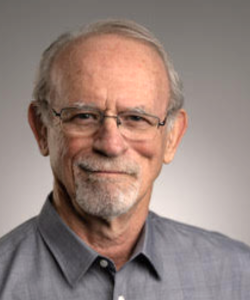


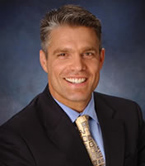
 Kai MacDonald, MD, graduated from the University of Minnesota medical school and now practices in San Diego. His practice life has reflected his broad, eclectic interests, and in the past has included being board-certified in family practice, and acting as a teaching physician on consult-liaison (inpatient hospital psychiatry), emergency room and inpatient psychiatric units. Residents have voted him as a top teacher in years past. Based on his interest in addiction, Dr. MacDonald is medical director for a local outpatient substance abuse program, and has actively worked with patients in recovery for years. Additionally, in collaboration with several colleagues, Dr. MacDonald designed and teaches a quarterly remediation course for practicing physicians referred due to boundary violations; this course has been recognized as a national gold-standard by the medical board. In 2009, he was voted by his peers as one of the top psychiatrists in San Diego. Though he identifies himself primarily as front-line clinician, Dr. MacDonald has participated as a clinical investigator in dozens of pharmaceutical trials in schizophrenia, bipolar disorder, ADHD, anxiety, depression and agitation. More recently, a pointed interest in social neuroscience and attachment led to authoring several ongoing studies on the activity of oxytocin, a uniquely social neuropeptide. Dr. MacDonald has published peer-reviewed articles on a variety of topics, including dissociation and dissociative amnesia, ADHD, interoception, agitation, eye contact, bipolar disorder, and oxytocin. Over the last decade, Dr. MacDonald has worked to hone his skills as a psychotherapist, participating in training in EMDR, ISTDP (intensive short-term dynamic therapy) and AEDP (accelerated experiential dynamic psychotherapy). His long-term professional interests include understanding the functional neurobiology of emotion, attention and attachment, mastering and teaching techniques of rapid psychotherapeutic change, and translating neurobiological insights into practical models for clinicians. In terms of his relationship with AEDP, this is what Dr. MacDonald writes: “I am attracted to AEDP’s focus on bondedness and genuine warmth in therapy, as well as its grounding in both evidence-based short-term therapy techniques and state-of-the-art neuroscience. This attraction–paired with my conviction that a new consilience between biology, phenomenology and shared humanity is upon us–spurred my involvement in the inception of Transformance: The AEDP Journal, and an ongoing role as its neuroscience consultant.”